Iverson looks to improve playability at mountainous Whistling Rock
Whistling Rock CC in Chuncheon, South Korea, has reopened after a greens and bunkers renovation led by Eric Iverson of Renaissance Golf Design. The five year old course, originally designed by Ted Robinson Jr, has 27 holes and is located in a mountainous region, about 100km north-east of the capital, Seoul.
"The greens at Whistling Rock were really artfully done,” said Iverson. “But there are some that ended up being a little steep when matched with the superior turf conditions the club presents. Walking that fine line is something that we have a great deal of experience with, and I felt we could address this issue and add strategy and variety at the same time.”
Original architect Robinson moved around five million cubic metres of mostly rock to build the golf course, creating new corridors, not only for golf, but for the flow of water across the site. This process, combined with work done by landscape firm Pinnacle, under principal Ken Alperstein, has resulted in a remarkable set of artificial water features around the course.
“On many of the uphill holes, the greens were unnecessarily high, which affected playability,” said Iverson. “Typically, on an uphill hole we fight tooth and nail to get the green as low as it can be and still work. You want to minimise uphill approaches as much as possible, unless some substantial natural feature is part of the equation.
“On most of the holes we worked on at Whistling Rock, we wanted to reduce the uphill approach shots by lowering the greens as much as possible and tie them in really well so they were part of the overall landscape. To increase playability, we wanted to create more level entry areas into those greens so golfers who can’t fly the ball onto the green can run it on.
“As an example, the second hole on the Temple nine is a substantial par five with a long, steady climb. Prior to doing the work, the golfer would get close to the green only to be confronted by a steep ledge, a metre or more high, running up to the front edge. Honestly, that’s the last thing you want both for playability and the look of the hole.
“Often the front of the green had been raised to try to make the entire green flat enough, which is fine. But in many cases, like on this hole, there was the double whammy of the green sitting too high relative to the approach shot and, because it’s an uphill hole with a lot of grade, the green was made too steep in an effort to see the putting surface.”
| Slideshow HTML |
-
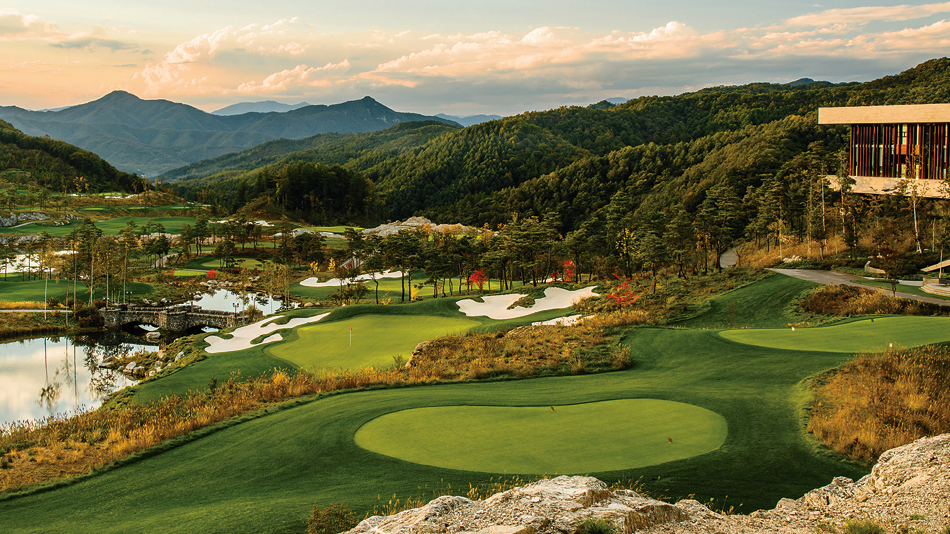
The Whistling Rock course by Ted Robinson Jr
-
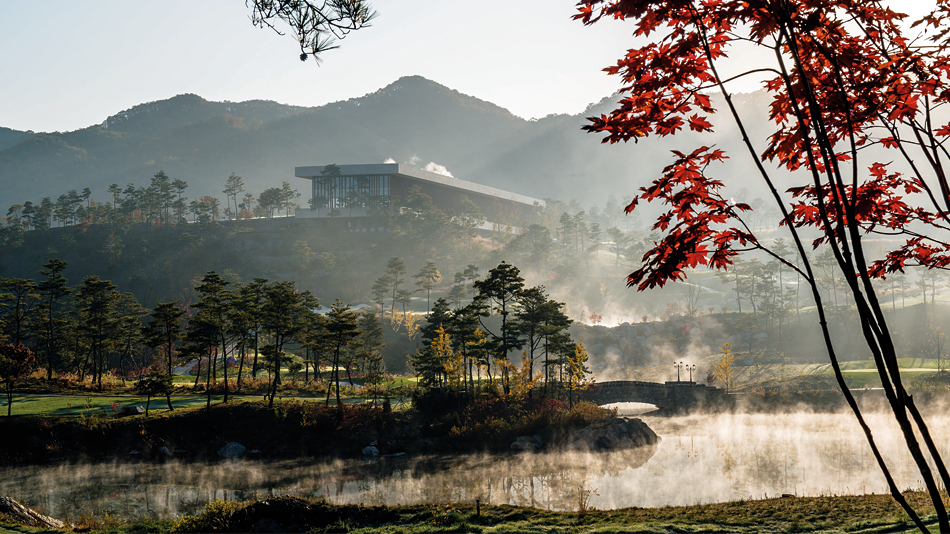
Iverson’s work has helped improve the bunkering
-
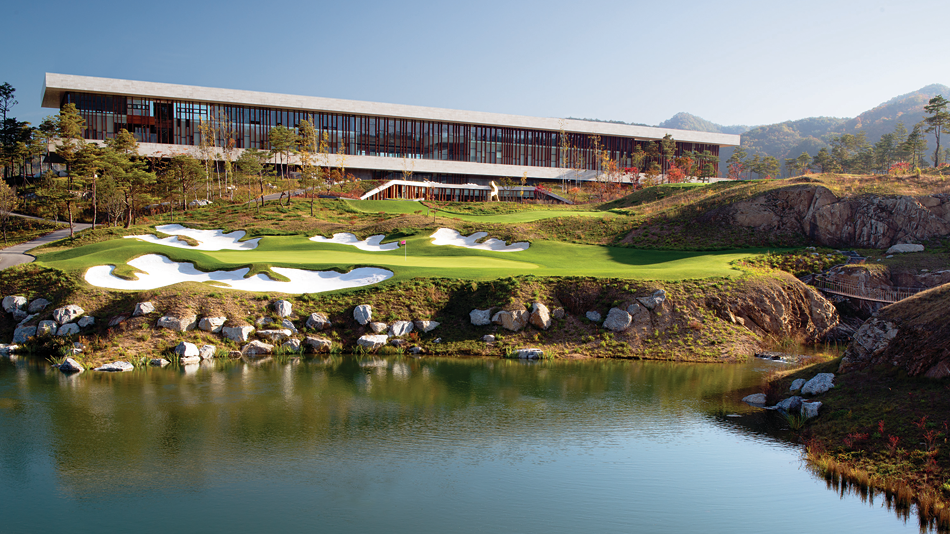
The course lies to the north-east of the South Korean capital Seoul
|