Canyon Meadows completes first phase of vegetation management plan
The first phase of a vegetation management plan – created by golf course architect Wade Horrocks of design firm Ground Cubed – has been completed at Canyon Meadows Golf & Country Club, located in southern Calgary, Canada. The course is the host venue of the Shaw Charity Classic on the PGA Champions Tour.
The impetus for the project was to reduce the number of trees on the course that were either in poor health or detrimental to the course strategy.
“The playing corridors are planted with northwest poplar trees, but over the years well-meaning green committees have added spruce trees inside the existing poplar treelines, considerably reducing the width of the playing corridors,” said Horrocks. “These trees have now grown considerably, blocking views to bunkers, and eliminating strategic playing angles.
Overhanging tree canopies had eliminated large portions of several fairways, making it unfair for many players with left-to-right or right-to-left ball flights. Also, some trees located near fairway bunkers had created a double hazard situation, where players were presented with little chance of hitting an approach to the green.
“The trees were spaced too closely together – the planting was too dense,” said Horrocks. “Missing the fairway by just a couple yards often meant playing out sideways with almost no chance for a recovery shot. Low branch height resulted in poor turf conditions, further limiting recovery shot opportunities.
“About 200 spruce trees were in poor health and dying following a couple years of prolonged drought and poor-quality water. Over time, with continued tree growth, the golf course had become excessively difficult for many players.”
At the end of 2019, Horrocks did a presentation on the benefits of the club having a vegetation management plan, including considerable tree removal.
The guiding principles of Horrocks’s plan was to showcase the parkland character of the course; remove trees to make each hole unique; enhance strategic interest and present risk and reward opportunities; make the course fairer and enjoyable for all abilities; and provide a foundation for exceptional playing conditions.
“The goals of the plan were to enhance visual interest throughout the course, provide a visual buffer to adjacent land on the north property boundary, present more playing options, increase pace of play, and to improve maintenance efficiency and turf conditions,” said Horrocks.
The club voted 96 per cent in favour of implementing the vegetation management plan, which included the removal of hundreds of trees and new tree planting around the course perimeter.
“Where the trees were once considered sacrosanct and their removal considered a non-starter or near impossible task, tree removal efforts were now fully embraced by the club,” said Horrocks. “The green committee did a great job communicating with the members, they really set us up for success.”
The first phase of work has been completed with around 200 trees removed.
“The third hole has seen more strategic angles introduced from the tee, bringing the bunkers on the inside of the dogleg more into play,” said Horrocks. “At the following two holes, we have opened views of the bunkers to enhance visual and strategic interest.
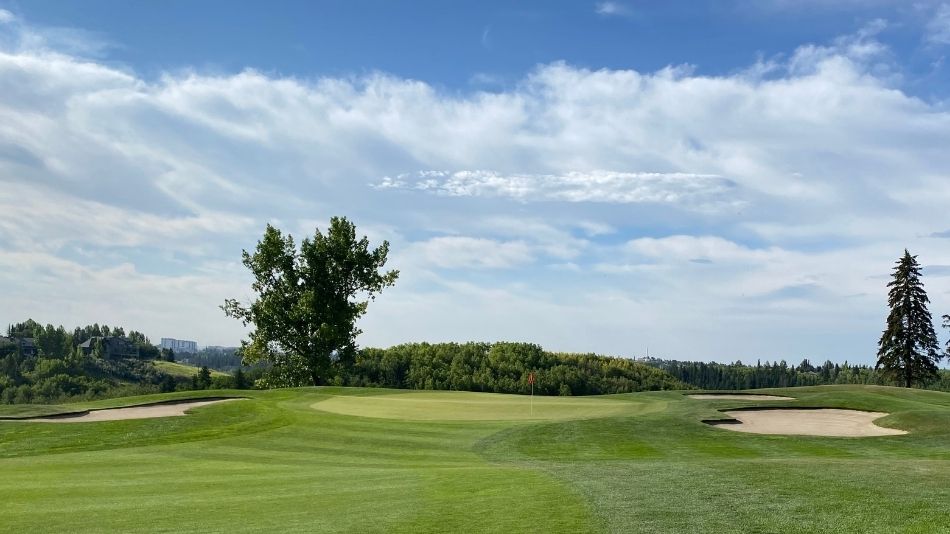
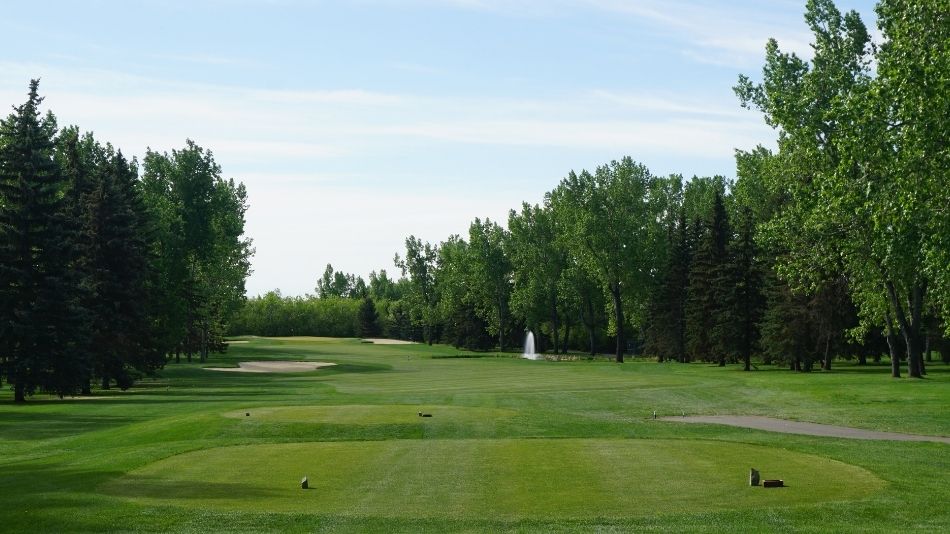
“At the seventh, the fairway bunker is now in full view and the double-hazard situation has been eliminated. We have also exposed long distance views towards the Rocky Mountains and Fish Creek Park at the eighth, celebrating the hole’s unique setting. While at the eighteenth, we have created an exciting risk and reward opportunity for this reachable par five.
“The work has been very enthusiastically received by members!”
Subsequent phases will include tree planting along the north and east property boundaries to enhance the visual buffer, plus the replacement of the ageing poplars with new planting.
| Slideshow HTML |
-

Wade Horrocks
The first phase of a vegetation management plan has been completed at Canyon Meadows Golf & Country Club in Canada (tree removal on the eighteenth, pictured, has introduced a risk and reward element)
-
Wade Horrocks
Trees have been removed behind the eighth green to highlight views of Fish Creek Park and beyond
-
Wade Horrocks
The fairway bunker is now in full view and the double-hazard situation has been eliminated on seventh
|
| ADd Image Credit here for home page | Wade Horrocks |